
Male Infertility Treatment in Jaipur
Understanding Male Infertility & Available Treatment Options in Jaipur
If you and your partner have been trying to conceive without success, you are not alone. According to the Indian Council of Medical Research (ICMR), male factor infertility contributes to nearly 50% of cases in Indian couples. The encouraging news: over 70% of male infertility causes are identifiable and treatable.
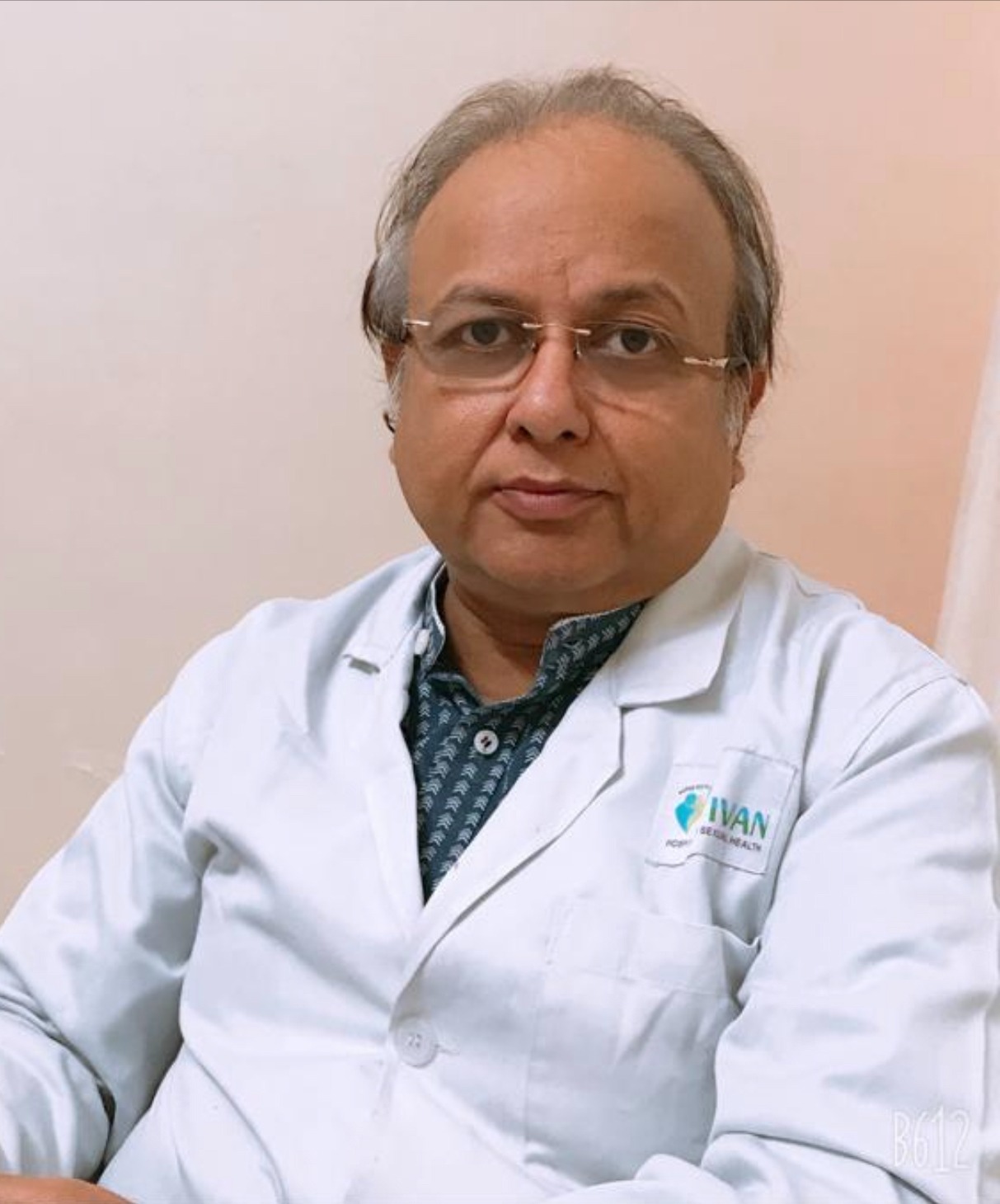
At Vivan Hospital, Jaipur, Dr. Saatiish Jhuntrraa — a board-certified sexual medicine specialist with 34+ years of clinical experience and a Fellowship in Sexual Medicine (FECSM, Spain) — offers comprehensive, personalised male fertility evaluation and treatment. With more than 30,000 patients treated, Dr. Jhuntrraa follows a root-cause approach that goes beyond symptom management to restore natural fertility wherever possible.

What is Male Infertility?
Male infertility occurs when a man's sperm cannot fertilise a woman's egg due to problems with sperm production, sperm quality, sperm delivery, or hormonal function. Clinically, infertility is defined as the failure to achieve a clinical pregnancy after 12 months of regular, unprotected sexual intercourse (WHO definition). It is not the same as impotence (erectile dysfunction).
Common conditions that cause male infertility include:
- Oligospermia — Sperm count below 15 million per mL (WHO threshold)
- Azoospermia — Complete absence of sperm in semen, affecting ~1% of men
- Asthenozoospermia — Less than 32% of sperm with forward progressive motility
- Teratozoospermia — Less than 4% normal-form sperm (Kruger criteria)
- Varicocele — Enlarged testicular veins, present in 35–40% of infertile men
- Hormonal hypogonadism — Low testosterone, elevated FSH/LH

Causes of Male Infertility
Male infertility can result from a combination of medical and lifestyle factors.
Medical Causes
- Varicocele: The single most common correctable cause of male infertility
- Infections: Sexually transmitted infections (chlamydia, gonorrhoea) that damage sperm ducts
- Retrograde ejaculation: Sperm enters the bladder instead of exiting the urethra
- Genetic conditions: Klinefelter syndrome (XXY), Y-chromosome microdeletions
- Undescended testicles (cryptorchidism): Impairs sperm production if untreated
- Hormonal disorders: Low testosterone (hypogonadism), hyperprolactinaemia
- Azoospermia: Obstructive (blockage) or non-obstructive (production failure)
Lifestyle Causes
- Tobacco use reduces sperm count by up to 22% (study: Fertility & Sterility, 2022)
- Alcohol consumption above 14 units/week significantly impairs testosterone
- Obesity: BMI > 30 is associated with 42% higher risk of oligospermia
- Chronic scrotal heat exposure (saunas, tight clothing, laptops on lap)
- Exposure to pesticides, heavy metals, and radiation
- Anabolic steroid use suppresses the HPG axis, reducing or stopping sperm production
Understanding the exact cause is essential for selecting the right male infertility treatment in Jaipur.
How Is Male Infertility Diagnosed?
Diagnosis at Vivan Hospital begins with a confidential consultation, followed by:
STEP 1: Semen Analysis (WHO 5th Edition criteria)
- Sperm count, motility (progressive + total), morphology (Kruger strict criteria)
- Semen volume, pH, liquefaction time
- Recommended after 2–5 days abstinence
STEP 2: Hormonal Profile
- FSH, LH, Total Testosterone, Prolactin, TSH
- Identifies hypogonadism, hyperprolactinaemia, thyroid dysfunction
STEP 3: Scrotal Doppler Ultrasound
- Detects varicocele, epididymal cysts, testicular atrophy
STEP 4: Advanced Tests (where indicated)
- DNA Fragmentation Index (DFI): sperm DNA damage, important for recurrent IVF failure
- Karyotyping / Y-chromosome microdeletion analysis
- TESE / Micro-TESE eligibility assessment for azoospermia
- Post-ejaculatory urinalysis for retrograde ejaculation

Get Personalized Male Infertility Treatment Now
Why Choose Dr. Saatiish Jhuntrraa at Vivan Hospital Jaipur?
Dr. Saatiish Jhuntrraa is one of Rajasthan's most experienced sexual medicine and male fertility specialists, with credentials recognised at the highest international level:
Key Highlights:
- MBBS — PGIMS, Rohtak (one of India's top medical colleges)
- Post-Graduate Diploma in Psychiatry — CIP Ranchi
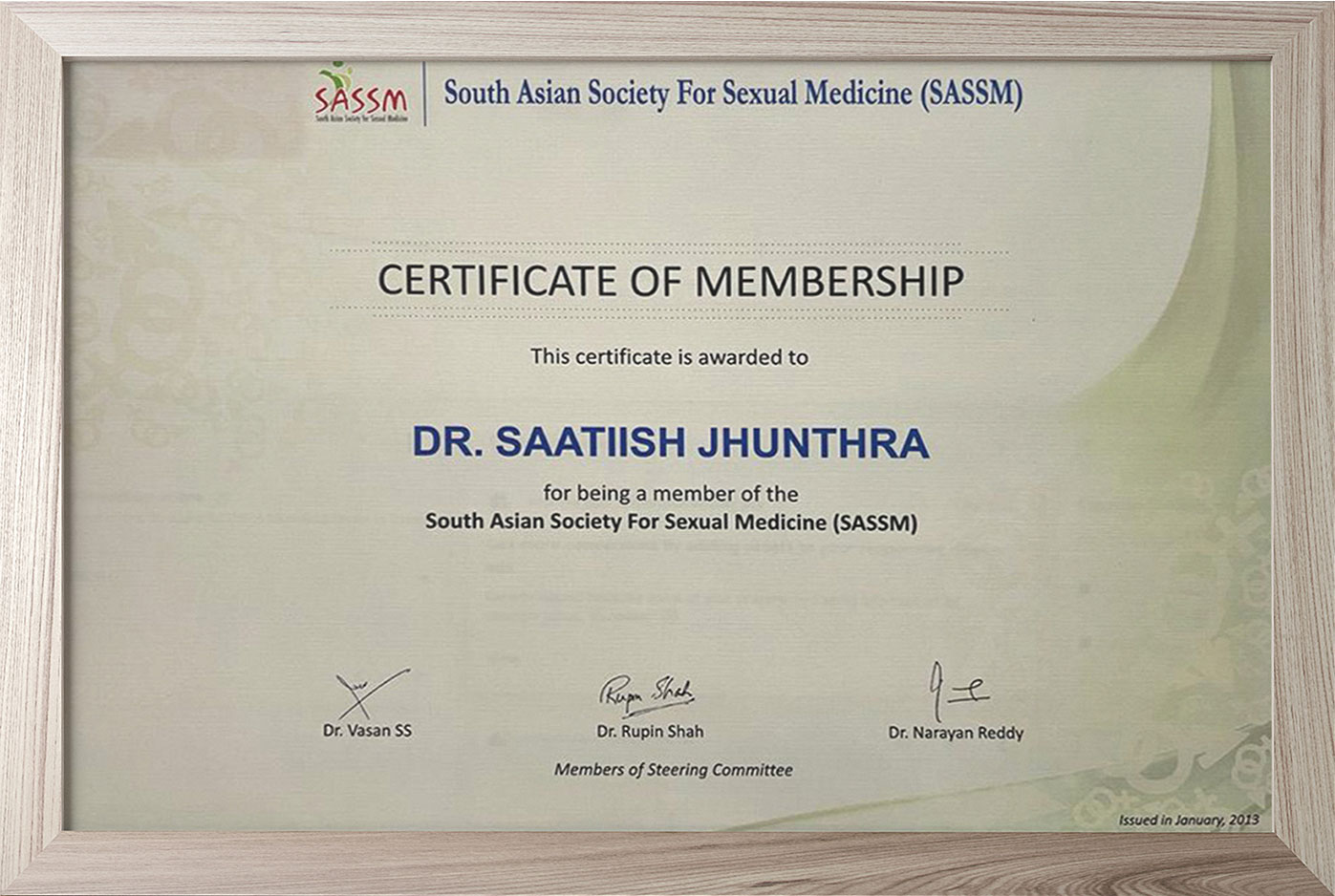
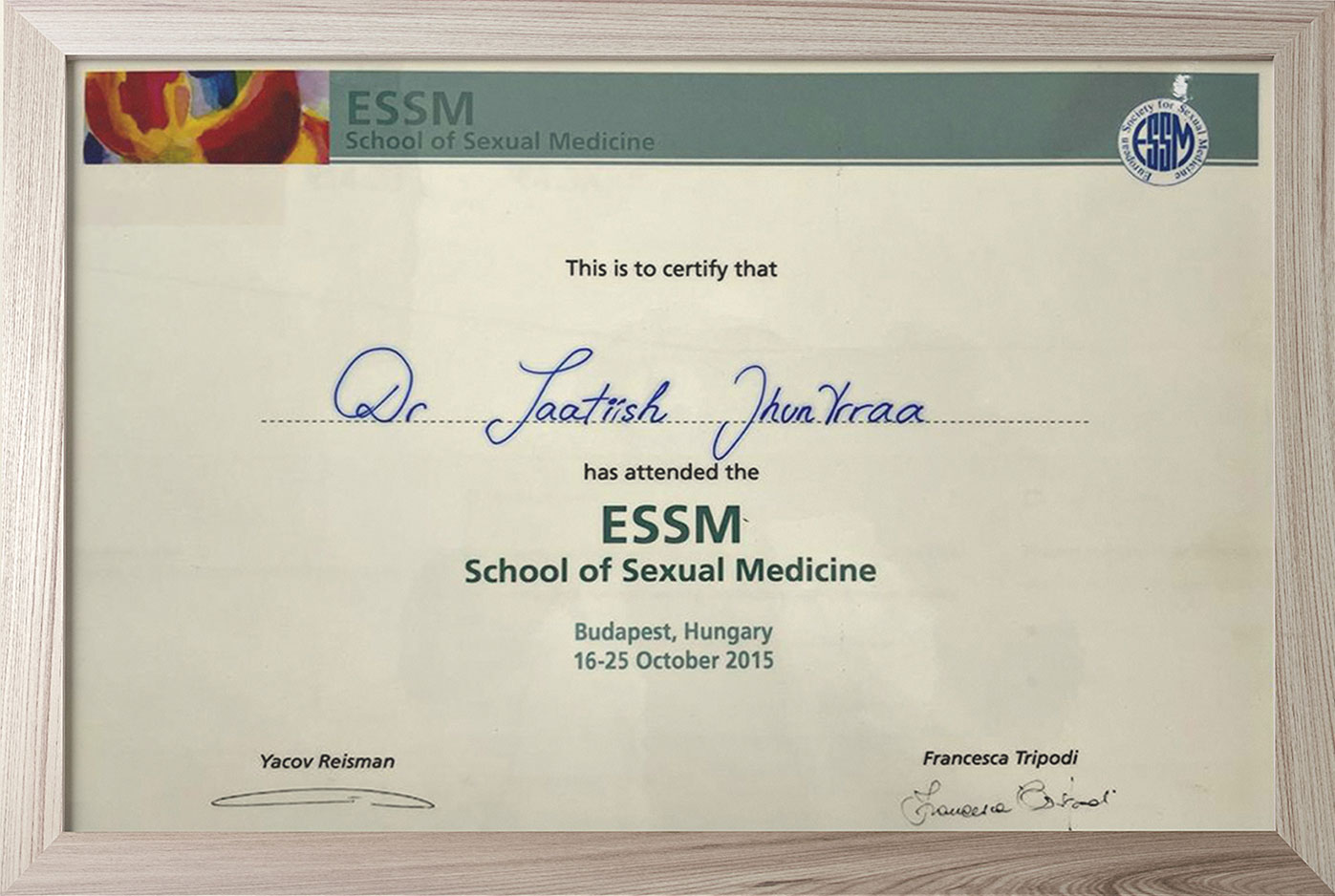
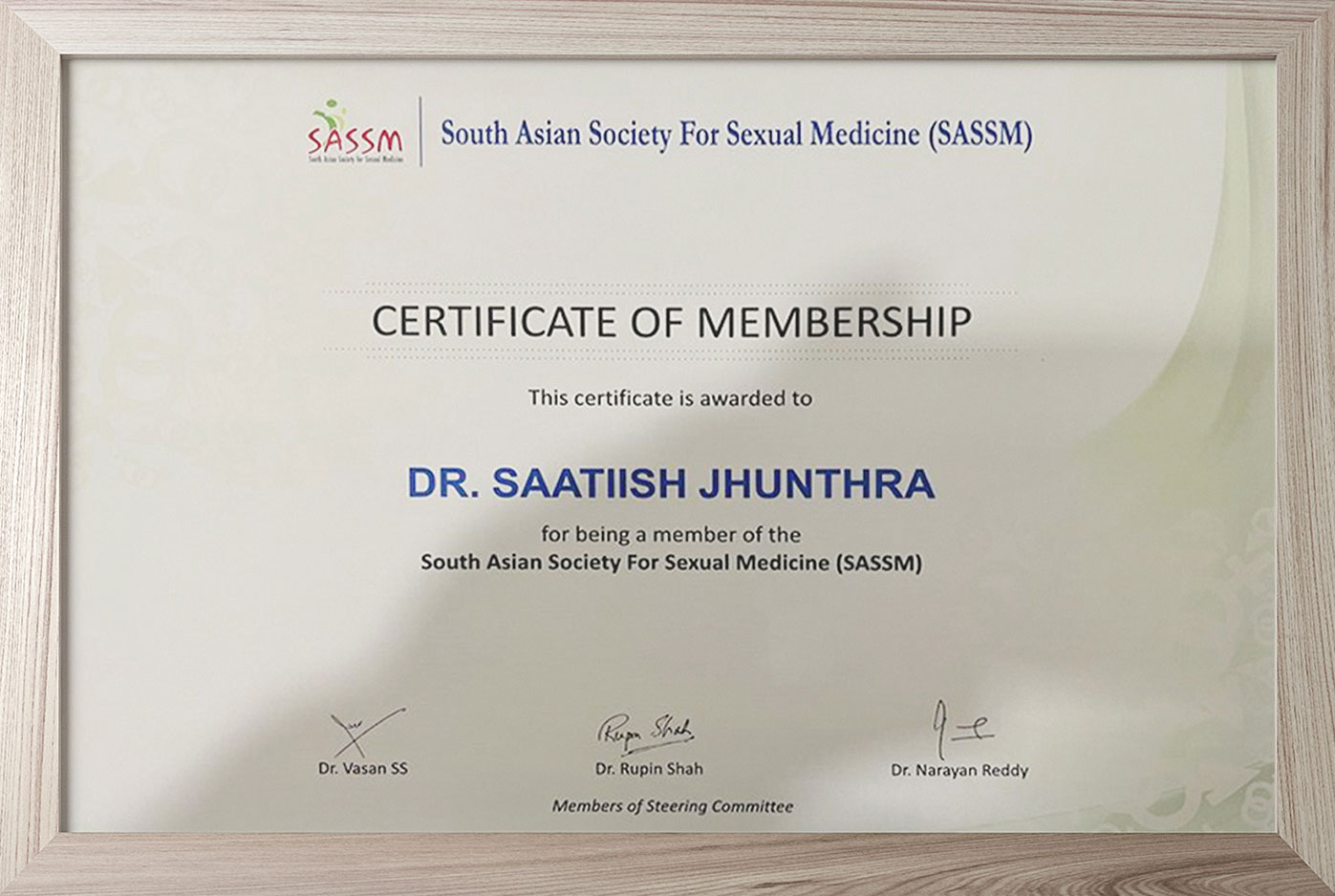
- FECSM — Fellow of the European Committee of Sexual Medicine (Spain) — international gold standard in sexual medicine, held by fewer than 300 specialists globally
- 34+ years of full-time clinical practice in male sexual and reproductive health
- 30,000+ patients treated; 630+ couples counselled
- Research presentations at national urology and sexual medicine conferences
- Speaks Hindi and English; consultation available in person and online
Achievements
Why Choose Vivan Hospital Jaipur?
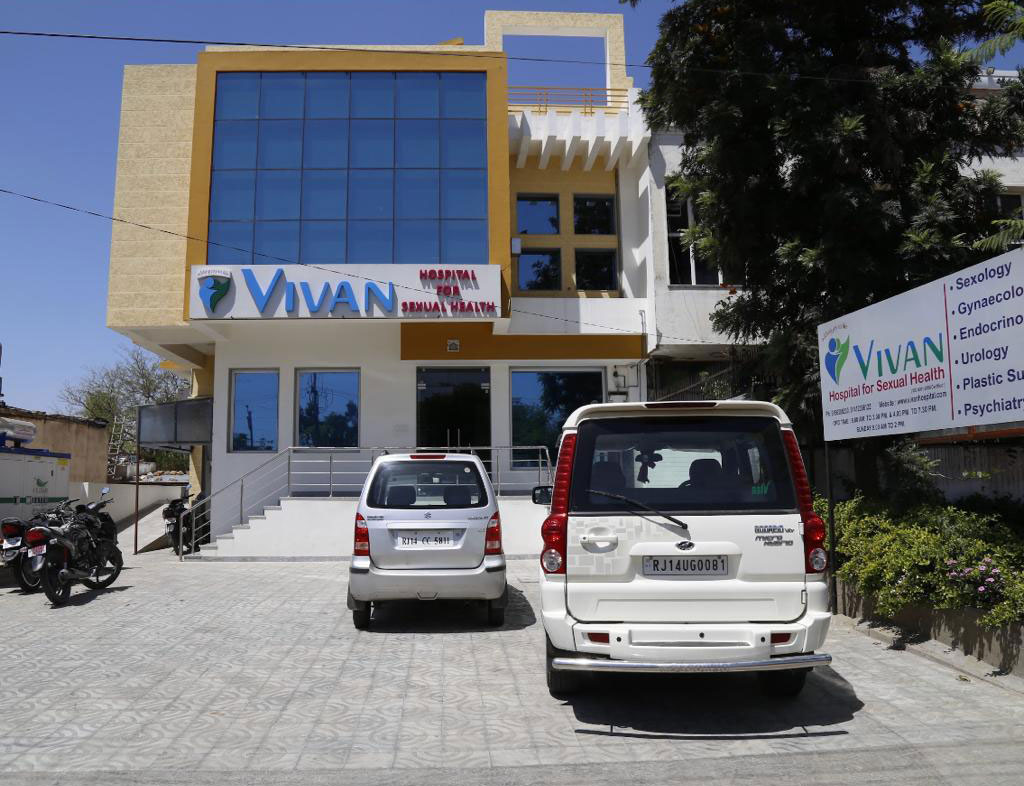
Vivan Hospital is a modern, ISO 9001:2008 certified healthcare facility known for its advanced treatment and patient-friendly environment.
- State-of-the-art infrastructure with a 3-storey building
- Advanced operation theatre (OT) equipment
- Modern diagnostic laboratory
- Deluxe and semi-private rooms
- Quiet and comfortable waiting area
- Power backup for uninterrupted services
- Computerized systems for accurate diagnosis
Advanced Male Infertility Treatment Options in Jaipur
Treatment at Vivan Hospital is tailored to the specific cause identified on diagnosis.
1. Low Sperm Count (Oligospermia) Treatment
Hormonal stimulation (FSH / hCG injections), antioxidant therapy (Coenzyme Q10, L-carnitine, Vitamin E, Zinc), lifestyle modification programme, and repeat semen analysis at 90 days.
2. Azoospermia Treatment
- Obstructive azoospermia: surgical sperm retrieval via PESA or TESA, then ICSI
- Non-obstructive azoospermia: Micro-TESE in coordination with partner fertility centre; hormonal pre-treatment may improve retrieval rates in selected patients
3. Varicocele Treatment
Microsurgical varicocelectomy improves semen parameters in 60–70% of patients (Cochrane 2021). Associated with significant improvement in natural conception rates within 12 months.
4. Hormonal Infertility
Clomiphene citrate, FSH/hCG protocols for hypogonadotrophic hypogonadism; thyroid correction.
5. Sperm Motility (Asthenozoospermia) Treatment
Antioxidant cocktails, infection treatment where culture-positive, lifestyle correction. In vitro activation techniques assessed where motility severely compromised.
Assisted Reproductive Techniques (Art)
Where natural conception is not achievable, Dr Saatiish Jhuntrraa coordinates with accredited ART centres for: IUI (intrauterine insemination), IVF (in vitro fertilisation), ICSI (intracytoplasmic sperm injection — the gold standard for severe male factor infertility).
Treatment Comparison
|
Condition |
First-Line Treatment |
Timeframe |
Success Indicator |
|
Low Sperm Count |
Hormonal therapy + antioxidants |
3–6 months |
Sperm count > 15M/mL |
|
Varicocele |
Microsurgical varicocelectomy |
6–12 months |
60–70% sperm improvement |
|
Azoospermia (Obstructive) |
PESA / TESA + ICSI |
Single cycle |
Sperm retrieval rate ~90% |
|
Azoospermia (Non-obstructive) |
Micro-TESE + ICSI |
Single cycle |
Sperm retrieval rate 40–60% |
|
Hormonal Deficiency |
FSH / hCG / Clomiphene |
3–6 months |
Testosterone normalisation |
|
Poor Motility |
Antioxidant therapy + lifestyle |
2–4 months |
Motility > 32% progressive |
|
Severe Male Factor |
ICSI |
Per IVF cycle |
Fertilisation rate 70–85% |
How Long Does Male Infertility Treatment Take?
Male infertility treatment duration depends on the underlying cause:
- Lifestyle modification: improvements visible in 60–90 days (one spermatogenesis cycle)
- Hormonal therapy: 3–6 months to see significant sperm parameter changes
- Varicocelectomy: 6–12 months for full semen quality improvement post-surgery
- Surgical sperm retrieval (PESA/TESA): same-day procedure, ICSI cycle begins within weeks
- LiART cycles (IUI/IVF/ICSI): 4–6 weeks per cycle
Dr. Saatiish Jhuntrraa typically schedules a follow-up semen analysis 90 days after initiating any medical treatment, as this corresponds to one complete sperm production cycle.
Tips to Improve Male Fertility Naturally
STEP 1: Achieve and maintain a healthy BMI (18.5–24.9)
Obesity raises scrotal temperature and disrupts testosterone. Even a 5% weight reduction has been shown to improve sperm count in overweight men.
STEP 2: Eat a Mediterranean-style fertility diet
Rich in antioxidants, omega-3s, and zinc. Specific foods: walnuts, tomatoes (lycopene), leafy greens, eggs, lean meat, and whole grains. Avoid trans fats and processed meats.
STEP 3: Exercise moderately (150 min/week)
Moderate aerobic activity boosts testosterone. Avoid excessive cycling (compresses perineum) and extreme endurance sports (may transiently lower sperm count).
STEP 4: Reduce scrotal heat exposure
Avoid hot baths, saunas, and keeping laptops on lap. Sperm production requires 2°C below core body temperature. Wear loose-fitting, breathable cotton underwear.
STEP 5: Stop smoking and limit alcohol
Quitting smoking improves sperm motility within 3 months. Keep alcohol to < 14 units/week.
STEP 6: Manage stress with evidence-based techniques
Chronic cortisol elevation suppresses LH/FSH. Yoga, mindfulness, and adequate sleep (7–8 hrs) support hormonal balance.
STEP 7: Avoid anabolic steroids and testosterone supplements
Exogenous testosterone shuts down the body's own sperm production (HPG axis suppression). Recovery can take 6–24 months after stopping.
Frequently Asked Questions
What doctor treats male infertility?
Male infertility is treated by a male fertility specialist, andrologist, or urologist specializing in reproductive health.
Can male infertility be cured?
Many cases can be effectively treated depending on the underlying cause, such as hormonal imbalance or varicocele.
What is the main test for male infertility?
Semen analysis is the primary test used to evaluate sperm count, motility, and morphology.
How long does treatment take?
Treatment usually shows results within 3 to 6 months due to the sperm production cycle.
Is low sperm count treatable?
Yes, it can often be improved through medication, lifestyle changes, and hormonal therapy.
When should I consult a specialist?
If pregnancy does not occur after 12 months of regular unprotected intercourse, consult a specialist.
Schedule Your Consultation Today at Vivan Hospital Jaipur